5 min read
"Have You Paid for Knowledge?"
This article is Lu Canwei's 43rd original piece.
Click the blue 【Lu Canwei】 above to follow; remember to add a ⭐️ star mark~
I wonder how many people have paid for knowledge. Knowledge payment is not actually a new concept. In fact, I only started to engage with knowledge payment since last year; before that, I always thought it was an "intelligence tax."
Is knowledge payment really an intelligence tax?
As we age, we become increasingly anxious. Articles are everywhere suggesting that if you don’t learn something, you will face dire consequences. Even if you don’t actively seek them out, algorithms will recommend them to you because you belong to that demographic group.
Middle-aged, hair loss, anxiety.
So we start looking for solutions to our anxiety: gained weight? Buy a gym membership. Health issues? There are courses teaching you how to buy insurance. Can’t save money? You might need investment and financial management courses. Don’t know how to write? Then you need writing courses. Can’t attract rich second-generation individuals? Teacher Bobo will teach you how to get guys to give you gifts worth hundreds of thousands.
It seems that if we spend money, we can learn. But in reality, even among the TOP 10 courses, 98% of people cannot complete all 8 classes. I am among that group; although I often read Liu Run's public account and his community, I still have half of his 5-Minute Business School left to listen to.
So why do we still pay for knowledge? Because we don’t want to put in the effort. Even when you see ads on WeChat, they last only a few seconds. Short videos are also just a few seconds long before we scroll past. The longest videos on video accounts are only one minute long; if they are longer, you have to click to watch.
We have entered a fast-food era.
We no longer enjoy cooking for ourselves; takeout is sufficient. We are also unwilling to walk; we call a ride at the starting fare. We no longer take the time to read a good book but prefer to look at others' book summaries (which are falsely labeled as essential content). Everyone is in a hurry; everyone is busy and fulfilled. We sacrifice sleep to binge-watch shows, no longer savoring good food but instead saving time by eating fast food and playing games, busy with various meetings. Everyone is fast and busy, yet we cannot calm down to think about what is truly right for us.
Take the previous meetings as an example; a few days ago, I saw content discussing meetings:
I wonder how everyone feels about the content above?
Here, I borrow a quote often mentioned by Wang Xing in Liu Run's community: "Most people are willing to do anything to avoid real thinking."
Rather than reading the leftovers of others' nutrition, it’s better to read books ourselves. For instance, I often share content from books (there are so many topics to write about daily), but in the end, I hope everyone reads the books. This is also what I mentioned in a previous article: the human brain learns through examples. This is why books like "Influence" and "Thinking, Fast and Slow" seem so difficult; simply stating the results does not mean you understand them. Instead, examples force you to think and awaken your brain to do what it should, just like getting out of bed in the morning is difficult.
The brain is meant for thinking, not for memorizing.
Moreover, most books will recommend other books, or the authors will mention which books inspired them, thus further expanding your library.
Choosing Knowledge Payment Courses
Having said so much, do we still need knowledge payment? Of course, we do, but we cannot choose blindly.
So how do we select courses?
For example, if you want to learn about investing, find someone around you who is good at investing and ask them to recommend some books. Once you have a clear understanding of these books, you will have a basic concept.
Then go to knowledge payment platforms like Dedao or Geek Time to find corresponding courses. If the course content is similar to the basic concepts you’ve learned, you can ignore it. You can buy first-hand content cheaply, so why spend money on second-hand content?
What you need to understand is whether the course includes the teacher's own experience and summaries, such as their systems and methodologies; these are the knowledge you should truly spend money on.
Then look at the students' comments. If no students provide corresponding examples to express what they learned, it indicates that the course is either obscure and difficult to understand or contains no valuable content. After watching, you might just say, "I feel the same."
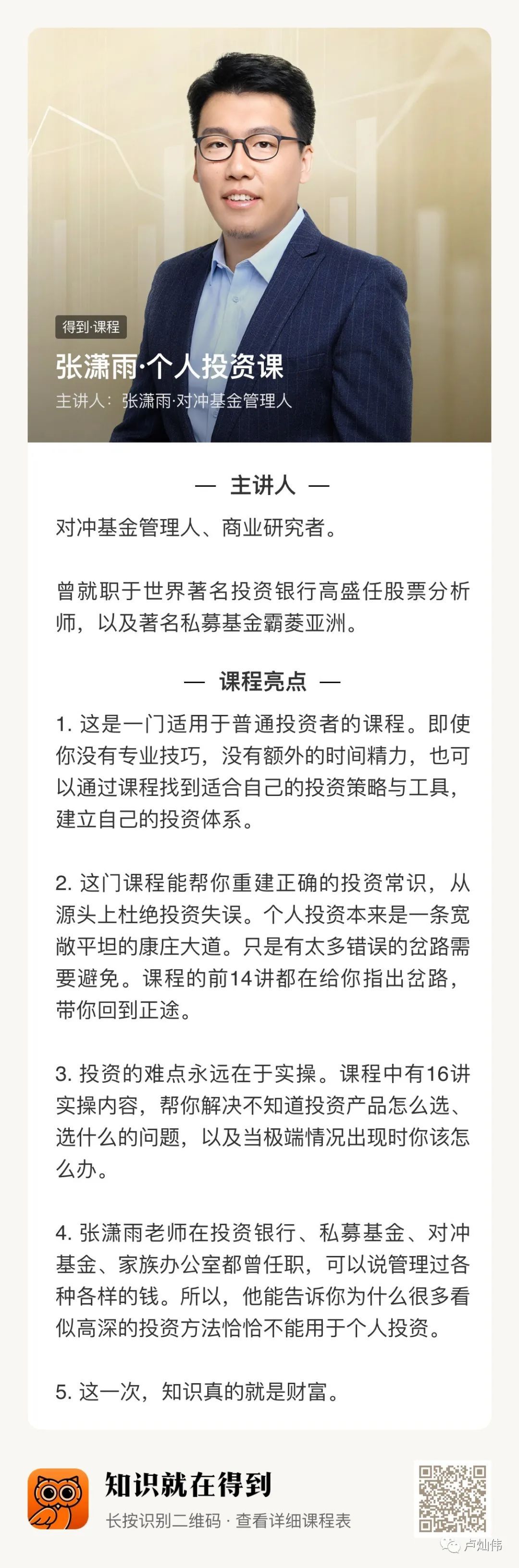
Of course, the easiest way is to ask people around you for recommendations. When you ask a few people and find that they recommend the same courses and instructors, you definitely need to check it out to see what’s going on. For example, no fewer than five people have recommended Zhang Xiaoyu's "Personal Investment Course" to me, and I plan to finish it during the Spring Festival. It’s the course below.
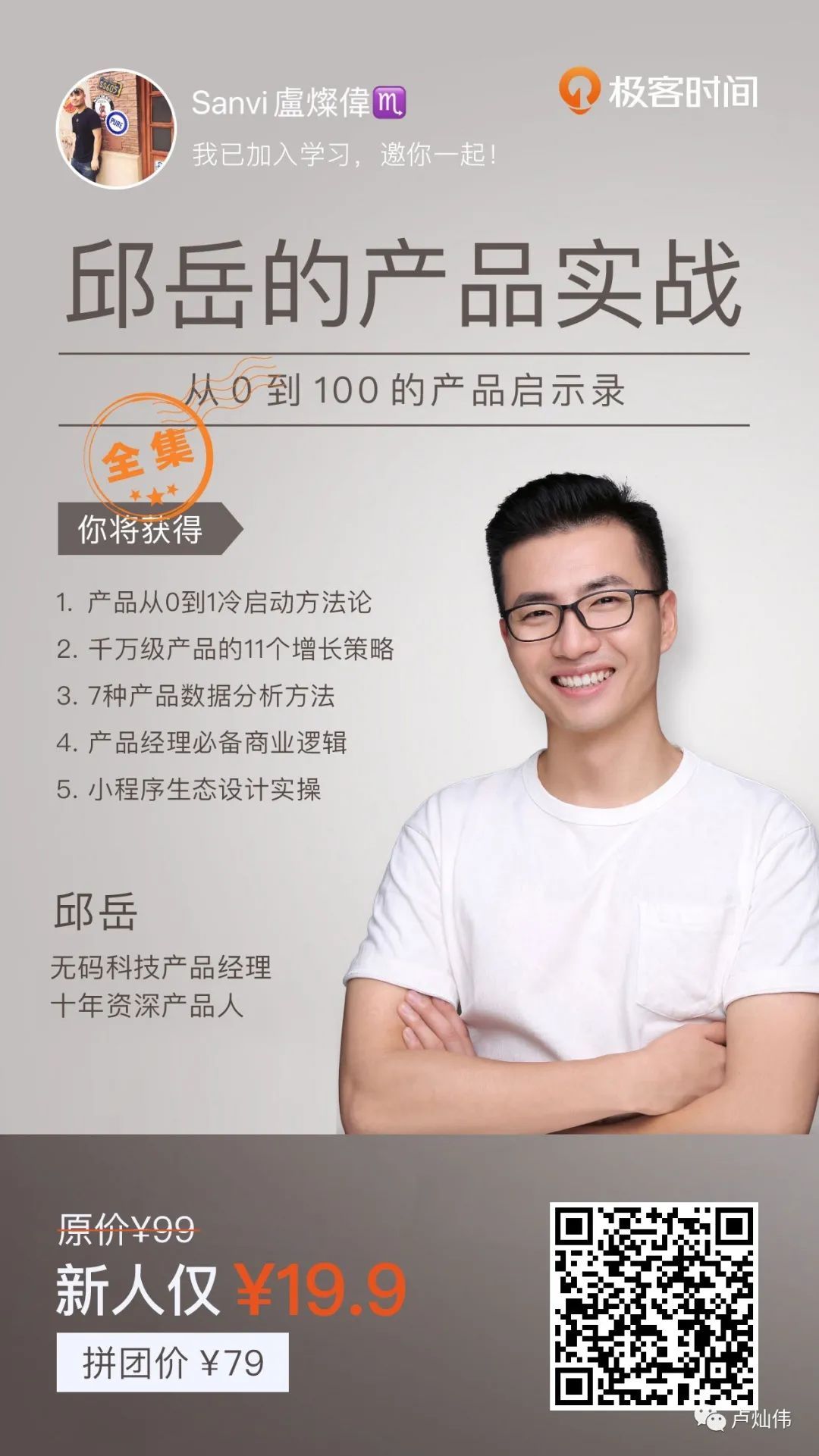
Additionally, there’s another course I’ve only completed half of, which is Qiu Erye's product course (there are too many lessons, over 50, and I’ve only completed 28). I also plan to finish it during the Spring Festival.
However, I personally believe the most valuable aspect should be the community. You see, many things in courses are difficult to understand; if you could understand them, you wouldn’t need a teacher. Therefore, the value of small group communities is far greater than that of the courses.
I initially wanted to write about my insights from the community over the past 30 days, but if I continue, it will be too long and not conducive to reading. So in the coming days, I will find a time to write about the growth in the Dragon Ball training group.
Recommendations:
Persist in daily updates; is it a carnival of self-satisfaction?
Let’s talk about Clubhouse today.
Blindly trusting market research may ruin your brand overnight.
How to quickly recover from adversity; here’s a tool for you.
Don’t know what you’re good at? You might need to take the Gallup Strengths Assessment.
How to make the right choices; you need to know these two pieces of information.
The four stages of cognition; which stage are you in?
Scan the code to follow 【Lu Canwei】, and send "self-media materials" in the background to receive two benefits for free.
1. A self-media tool package (worth 1999 yuan).
2. An electronic version of the "2020 Wealth Calendar," containing 365 money-making tips.
The appreciation feature has been canceled; "Looking" is the strongest support ↘