4 min read
"How I Turned an Idea into a Product in One Month"



Cause
After undergoing surgery at the end of last year, I began to reflect on what long-term high-intensity work had brought me. After thinking for a long time, I arrived at only one conclusion: a relatively stable life.
I started to bring out the public account I registered years ago and began writing some articles, mainly providing personal interpretations of some popular new products in the market. One reason was to better understand products and business (after all, I come from a technical background), and another was to hope to find something I could do in the future. Additionally, I wanted to meet more friends.
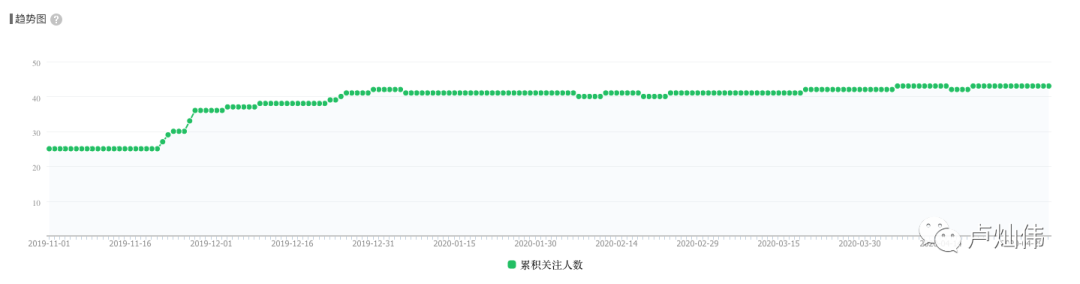
I have written about 20 articles intermittently, but my followers have not increased significantly. Although I wanted to meet more friends, the support mainly came from my circle of friends. The situation on Zhihu was slightly better, with users being about ten times that of WeChat. This shows that the traffic dividend for WeChat public accounts has basically diminished.
Moreover, at the end of the year, some friends hoped I could help them find jobs, and I also wondered if I could switch to a slightly easier job. I found that the biggest problem is that when you have worked for a certain number of years, the choices available to you become fewer and fewer.
Social certification is a very important thing. A friend of mine applied for a position at a certain company but received no response. Later, he reached out to me, and I referred him through an internal contact, which led to a successful onboarding.
I believe that everyone's private traffic is very valuable, but WeChat Moments is actually based on a private social distance. For example, if your friend A is hiring and your friend B wants to change jobs, you might not know about it. Therefore, there needs to be a secret base, a place where everyone can frequently gather. This way, information can be effectively shared.
Execution
"There are a thousand Hamlets in a thousand people's eyes."
If you cannot clearly describe your product, then make it and show them what your product looks like.
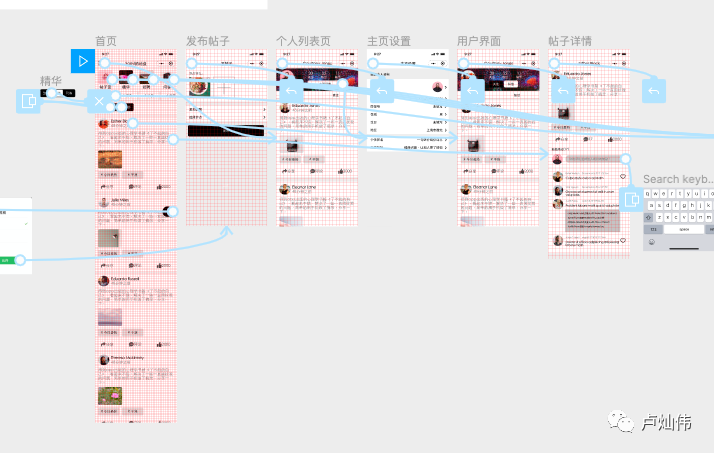
The first thing is to visualize your product, such as what it looks like and what the process is. Of course, you can draw it directly on paper, but I personally recommend Figma. Although the final interface may differ somewhat from the prototype, the main purpose of the prototype is to clarify the process for you.
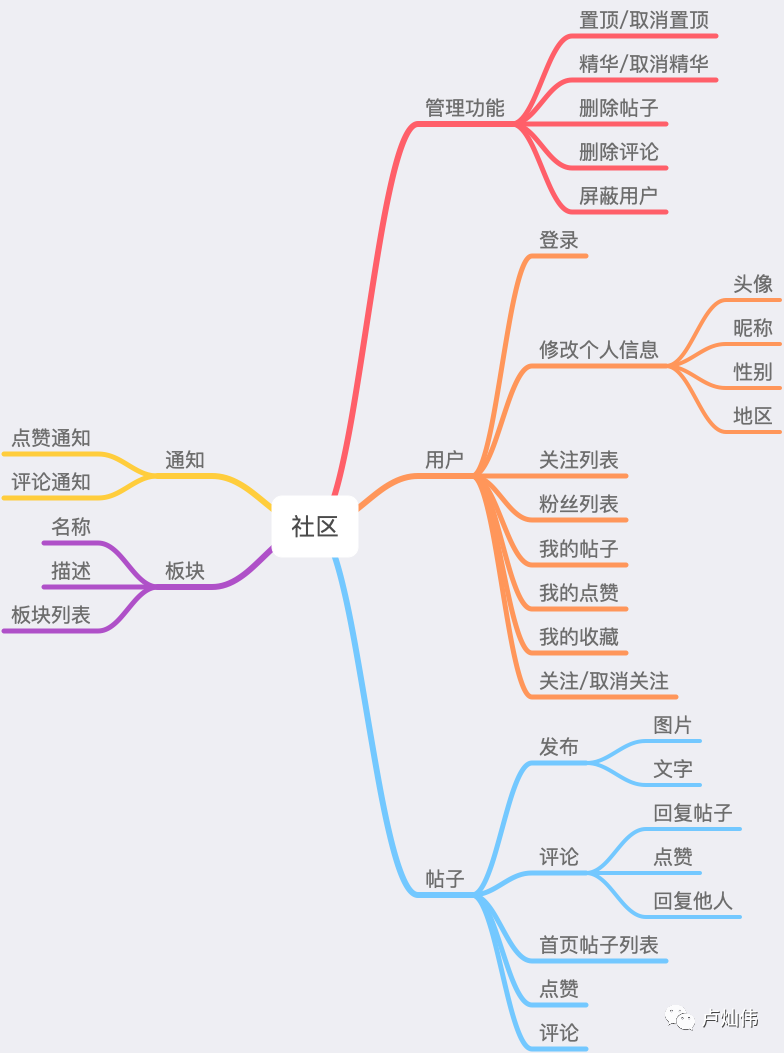
Then, I roughly wrote down the functional points using MindNode. Here, the main goal is to confirm what your product's MVP looks like. Don't think too big about your product; no product can go from zero to ten in one step; they all come from iterative development. Although I feel that what I wrote above is a bit excessive, it is still better than having no limitations at all.
After confirmation, it's time to start coding. The things here may lean more towards technical aspects, which may not be suitable to discuss in this article. I will write a separate article about the problems encountered and the thought processes for solving them.
Challenges
I think the most difficult part for independent developers is not doing the various tasks mentioned above, but rather in the allocation of energy.
The key point is that you have no income, so you need to find ways to create income. You need to allocate some of your time to find income-generating activities. For example, this project was actually stagnant throughout April because I took on a food delivery operation job, which I mentioned in another article.
Then, you need to balance the time spent with family. Previously, it was paid time off; now, it is unpaid, which makes a difference. Hahaha~~
Additionally, you will encounter many miscellaneous issues, such as mini-program qualifications, corporate identity issues, filing, servers, etc. Since you spend a lot of time at home, you may also start cooking for yourself. These matters will further encroach on your time. I will write another article discussing some non-technical issues encountered during the launch.
Fortunately, you don't have to wake up early the next day. But this also makes it difficult for you to manage your time. Currently, my approach is to install a timing app on my computer to ensure I work every day.
Failure
Initially, I hoped to provide a platform for these influential small B's to create communities, but the first version had too weak functionality. Compared to the platforms available in the market for building mini-programs, their features are too rich. Moreover, there are too many restrictions on launching community mini-programs, which is different from the past when you could just set up a filing website. The first version performed poorly after external testing. The small B's I know simply do not have the capability to handle these matters. The large B's are more inclined to build their own or use website building platforms, with no significant differentiation.
Later, I decided to shift towards the C-end while retaining the B-end website building capabilities. Anyone can create a community, and I hope to provide customizable community capabilities in the future.
Conclusion
The main reasons I am writing this article are several.
Finally, if you are interested in me or the project, whether in terms of product direction, technology, or other aspects, feel free to reach out for discussion.
I hope to manage both the community and myself well.
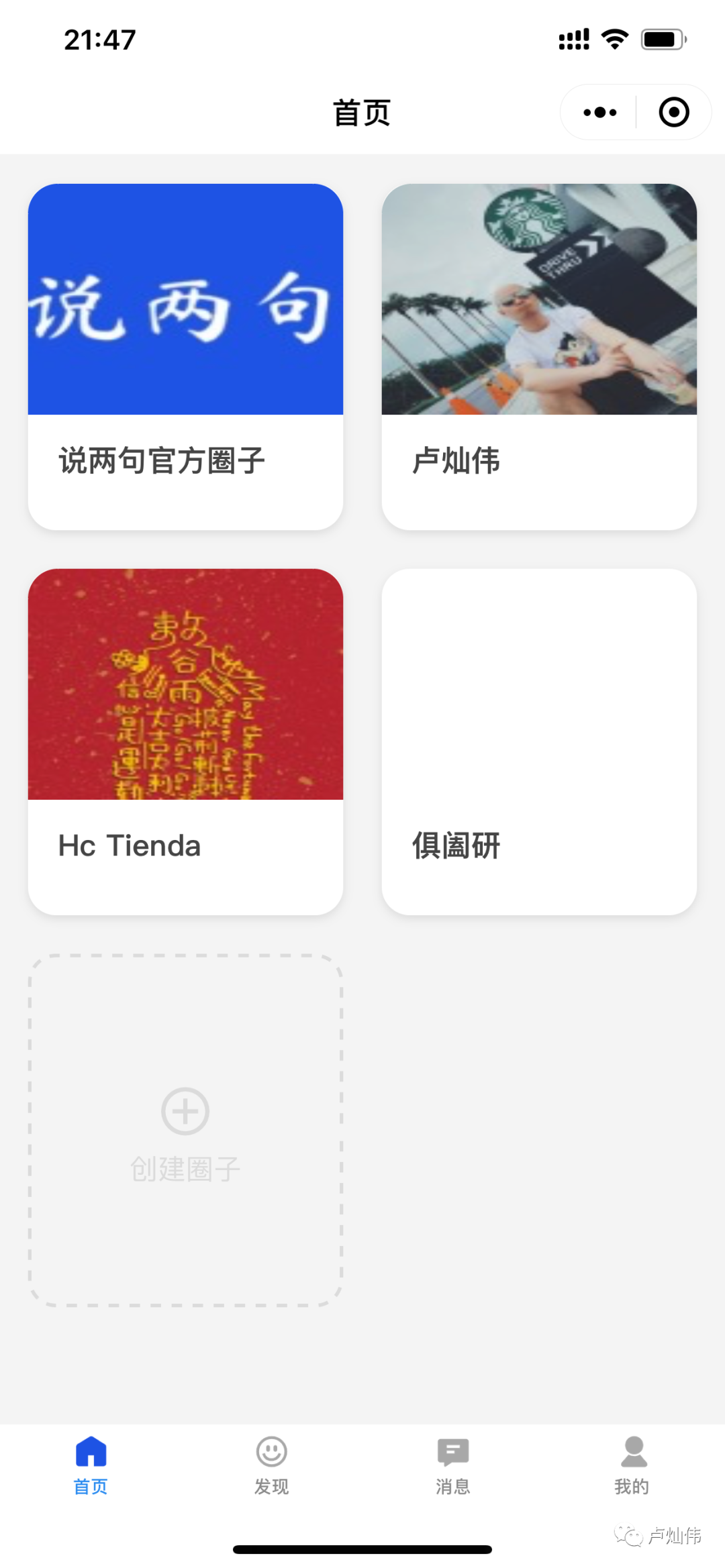
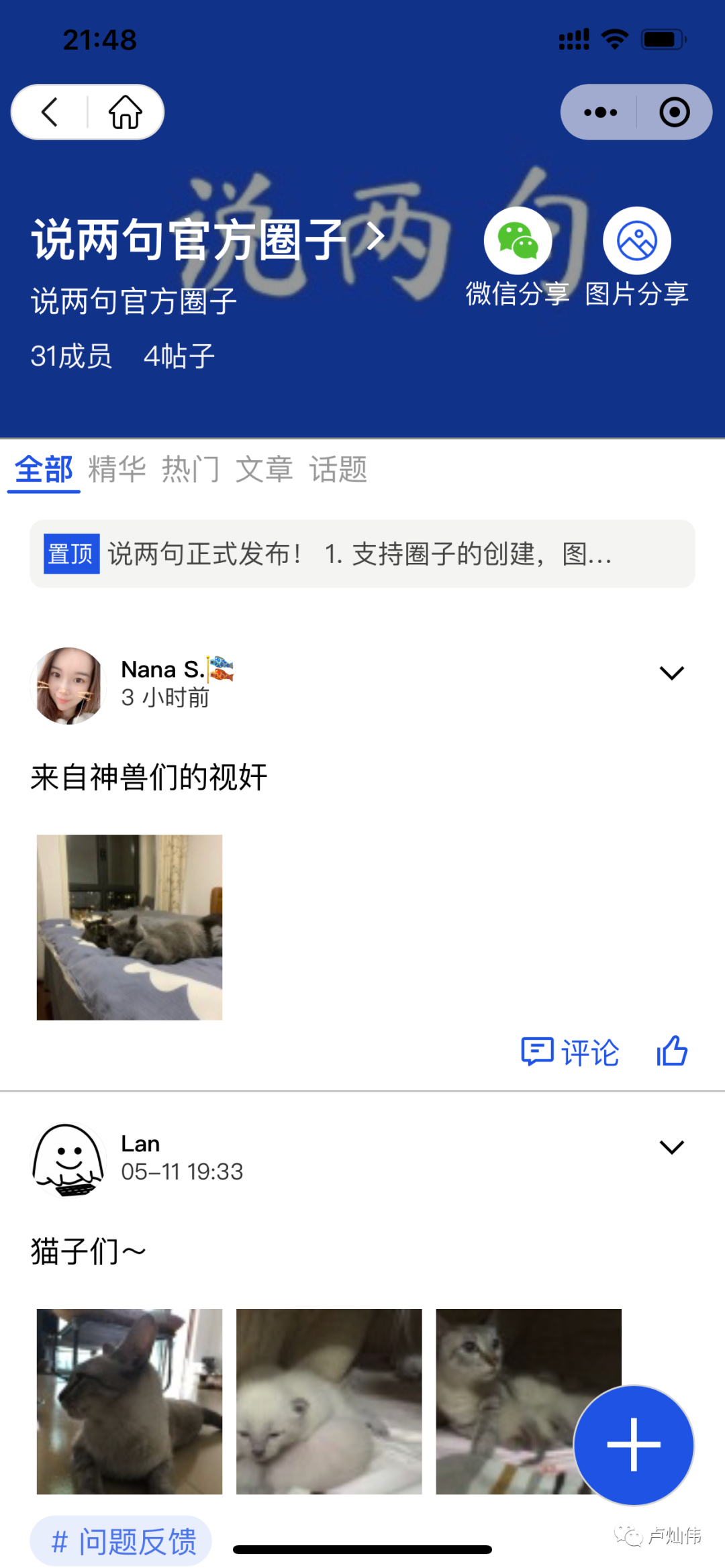
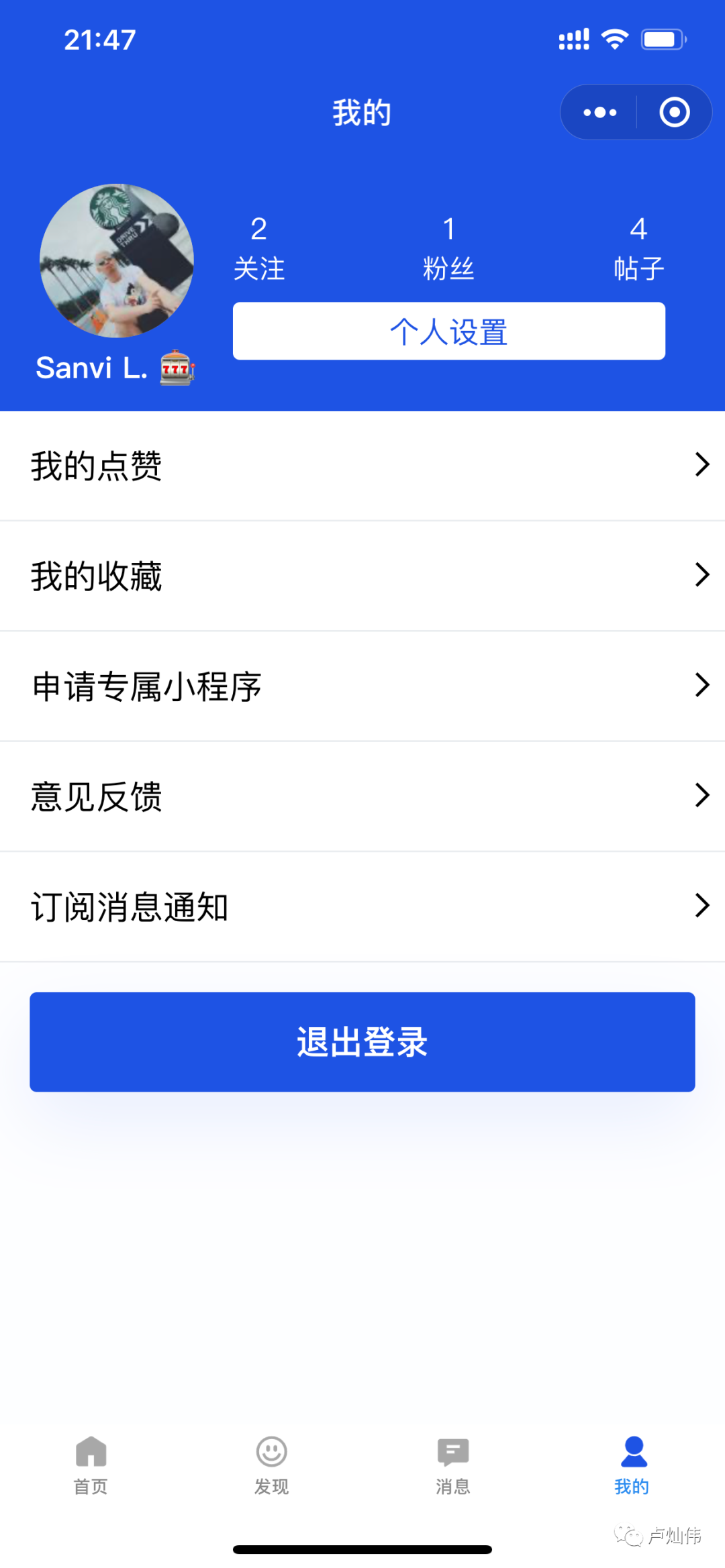
PS. Finally, here are a few product images.
Recent Updates
After a long wait, the first version has finally gone live! Welcome everyone to become seed users for testing!
Here is a mini-program code; feel free to reach out to me with any thoughts or suggestions.
If you wish to communicate with me, feel free to add me on WeChat.