20 min read
"Should I Start a Business or Not?"
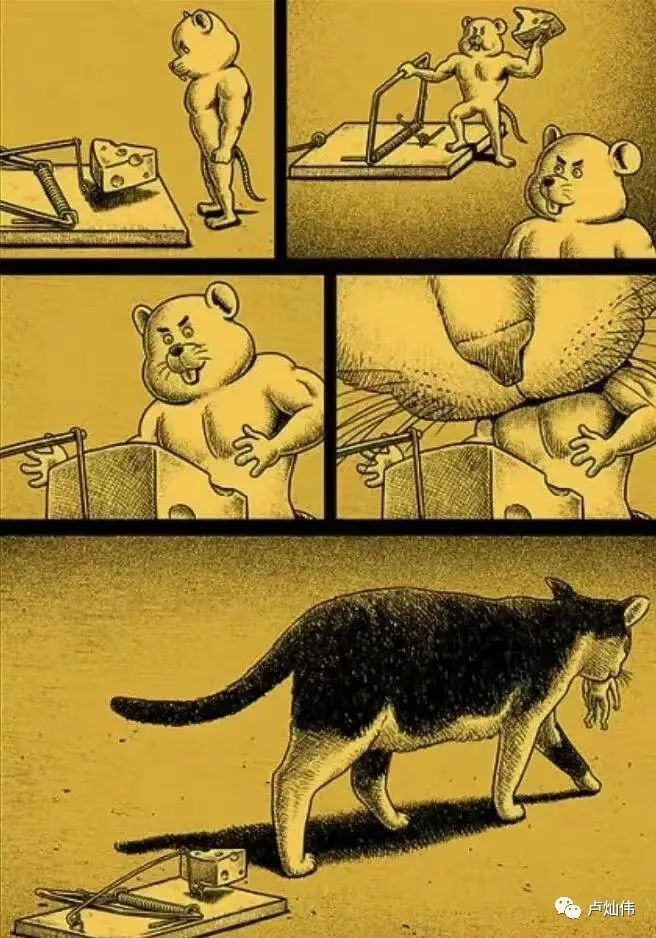
The article was shared last year in "The Data Planet of Passersby." Recently, I was invited to write a piece, so I revisited an article I had previously written and found that this one had not been shared on the public account yet. After reading it again, I realized it still contains some valuable insights. The article is relatively long, and I hope it can help everyone.
Below is the original text:
Hello everyone, I am Canwei, a programmer with 13 years of experience. I have worked in product management, started my own business, and have also been with some unicorn companies and large enterprises. Now, I am starting my own venture.
I am fortunate to be invited by Yingmu to share some of my experiences and insights during the entrepreneurial process, hoping it can be helpful to everyone.
The article is mainly divided into three parts:
Project Review
The era we are in is one of information explosion, where everyone talks about the necessity of side jobs, while others emphasize the importance of excelling in one's main job. Some people suggest that we should learn knowledge outside our own fields to become T-shaped talents. So how do we determine what is suitable for us to do, considering that everyone only has 24 hours in a day?
For example, you might see that Zhihu was very popular two years ago, and many people started to engage with it. Later, projects like food delivery CPS and offline promotions became popular, and many people jumped on those as well, but most ended up just running alongside. In fact, we often overlook the question of whether we are suited to do these things. If we are doing it out of interest, then we can spend time trying without expecting results. However, if we hope for positive feedback, we should carefully consider whether our decisions are correct.
Self-Analysis
We can spend time modeling ourselves. Below is my self-modeling:
For instance, I have 13 years of experience, many years of full-stack development, and my architectural skills are richer than my coding skills. I have worked as a product manager and have extensive product experience. I am more sensitive in business and operational capabilities compared to the average programmer, and I possess certain writing skills. My entrepreneurial experience has given me a lot of zero-to-one experience, and my time in unicorn companies has provided me with one-to-ten experience.
I believe many people know me from a previous article I wrote titled "How Programmers Can Earn Over Ten Thousand a Month Through Side Projects." If we consider this issue from the perspective of data-driven decision-making, it is undoubtedly a very poor decision.
After modeling myself, we can compare it with previous decisions and discover many issues.
Many people make decisions based on intuition. For example, since I come from a technical background, the most straightforward decision would be to take on outsourcing projects. Based on the self-modeling above, what decisions are more suitable for us?
Here, I will provide two directional thoughts based on my self-modeling:
Market Analysis
Since we have identified the value of my product, what we need to do is find the right market for deployment. Let's continue analyzing the outsourcing case.
What kind of companies or products need outsourcing services?
Startups without a technical team
This indicates they have a certain budget, but not much. If they had more money, they might directly hire a team instead of seeking outsourcing. This means your income will not have much premium; if you factor in communication and some technical education costs, as well as the costs of adjusting requirements, it is very likely that you will incur losses.
Companies with insufficient existing technical team resources
This indicates they have a budget, understand technology, and have a professional team. This means you will also not have much premium, and your development efficiency is strictly controlled. Unlike when you are at work, where you can occasionally slack off, if you want more freedom in your time, finding a company that supports remote work might be a good choice.
Individuals with ideas
There is a possibility of premium here, but it is also a mutual game where you make money through information asymmetry. You may need to spend a lot of time screening clients.
Market Competition
This can be divided into domestic and international markets. In the domestic market, you face competition between cities, such as between first-tier and fourth-tier cities. In the international market, you face competition between countries, such as competing for projects with individuals from India. The cold start here is very long, and the return cycle is also relatively long.
Conclusion
We can see that although the market is large, we do not have our own ecological niche, or the cycle to establish a competitive advantage is very long. This means we do not have competitiveness in this market. From the experiences written in previous articles, I spent a lot of time establishing customer acquisition channels, and the overall return is unquantifiable.
How to Choose a Good Track
Supply-Demand Model
We have reviewed my previous experiences, which is not a good decision-making case; it is essentially a supply-demand economic model.
I believe everyone understands this economic model: when supply exceeds demand, prices will inevitably fall. When demand exceeds supply, prices will inevitably rise. The outsourcing market is a very large market, and prices can be quite flexible, but the key issue is whether we are a supplier of scarce resources in this market. If not, then our prices cannot be set very high, and they may even be lower than our value in the workplace.
So, if you want to increase your salary or value, you need to find a large market where you can set flexible prices and become a supplier of scarce resources.
Marginal Cost
Continuing with the previous example, for each project we take on, our costs are roughly the same, and this does not decrease with our experience unless we spend extra time developing a framework, but that is unrelated to the project itself; it is a reduction in marginal costs brought about by tools.
Understanding this issue allows us to make more rational judgments when making decisions. For example, with the same tool, if one person offers you 10,000 yuan, and once the tool is developed, the matter is settled. Another person offers you 5,000 yuan, but each client pays you 1,000 yuan. How would you choose?
Person A spent 10,000 yuan to develop a tool, and their marginal cost of selling to clients afterward is almost zero. In your case, the tool provided to clients does not significantly reduce your marginal costs.
In Plan B, your income will increase with the number of clients, meaning the income generated from this project is continuous, and the marginal cost of this income is almost zero.
Therefore, when making decisions, we should consider whether this expenditure can bring us greater returns. For instance, when negotiating salary, if you only consider the salary without taking into account the company's track, industry position, personal growth opportunities, or whether there are stock options, then your efforts during this period will not lead to a reduction in marginal costs in the future.
Thus, when making decisions, it is best to work backward from three years later to see if the current decision can lead to a reduction in marginal costs.
Data Sources
When making a decision, we need data input, and this data should ideally include the following three aspects:
Industry Research Reports
I believe everyone looks at some industry data reports, which help us understand the current state of the entire industry, including information about competitors. For example, with the current popularity of new energy vehicles, how is the second-hand fuel vehicle market doing?
You can think about an answer in your mind without rushing to say it out loud.
Through some industry research reports, we can understand the growth situation of the second-hand car market and learn about some classifications within the industry:
I won't delve into the analysis here, but through this, we can understand the ecology of the industry and the situation of some companies in each ecological niche. Then, based on these companies, we can look for their financing situations and some reports to get a general idea of their status.
If some companies have gone public, we can also look at their financial reports to analyze their business models and see if their business models can be validated.
For example, a significant portion of Meituan's revenue comes from food delivery orders, but if they abandon the current outsourcing model and provide full benefits to delivery riders, they might incur losses.
Government Documents
If your industry is in China, then you need to carefully study government work reports and some official documents, such as the recently popular 14th Five-Year Plan. Let's take the second-hand car example again.
For instance, this year a document was issued, "Notice on Issuing Guidelines for Promoting Automobile Consumption in the Business Sector and Some Local Experience Practices," which mentions the development of second-hand car consumption.
Combining this with some interpretations of real estate policies, you will understand the development situation and support intensity of this industry in the coming years. Since there is a tailwind, why go against it?
Census Reports
I haven't researched this much, but we can glean a lot of information from population data. For example, by looking at the population flow in cities, we can judge which cities have potential for development, especially when we cannot compete in super first-tier cities and need to consider which cities might be more promising.
For example, we can understand why the three-child policy is being promoted, how the aging situation is, the age distribution, etc. All of these can give us a clearer understanding of the track we choose.
Insights from the Entrepreneurial Process
After saying so much, let’s talk about myself. Over the years, whether it was starting my own business, collaborating with others, or working as a freelancer, although I haven’t achieved great success, I do have some experiences from my missteps that I can share with everyone.
Should you start a business?
My first entrepreneurial venture dates back to 7-8 years ago, when mobile internet was just starting to take off, the iPhone 3GS had just been released, and Meituan was still in the midst of the group-buying war. At that time, the company I was with was among the first to launch an internet food delivery project. I was just a programmer with three years of experience, deeply obsessed with technology, so I invested a lot of effort into optimizing and encapsulating the code, including writing some of the frameworks ourselves. However, the project was eventually scrapped due to high costs and lack of profitability.
That was when I began to reflect on who technology serves. I came to the conclusion that technology serves business; without a business, no matter how well the code is written, it may just end up being a pile of code. I thought the prospects for food delivery were very promising, and since the company wasn’t pursuing it, I decided to do it myself. I considered that there were companies in Shanghai doing this, but none in Shenzhen, so I went to Shenzhen to start this business, diving headfirst into the entrepreneurial wave.
After a long struggle, I only stirred up a few small ripples; the company didn’t even make it to Series A before the team disbanded. Later, unable to understand how others were succeeding in their ventures, I worked at several startups, usually changing jobs every year. During this time, I noticed that some startups had very talented teams but ultimately couldn’t sustain themselves, while others with average teams managed to keep progressing. However, most companies had mediocre teams and businesses that were pretty much in line with predictions.
If small companies are like this, what about larger ones? I later joined Ele.me, which was in a phase of rapid growth at the time. After I joined, I found that the massive hiring led to a wide disparity in internal skill levels and chaotic management; it was the most exhausting phase of my career. Even so, Ele.me’s development was very rapid.
After spending some time at Ele.me, a friend of mine started a business and invited me to join their company. After seeing their business model, I chose to join as an early employee. This company eventually became a leader in the mobile payment sector. Over nearly four years, it grew from a small company to a phenomenal one. After hitting a bottleneck, I chose to step out of my comfort zone and start anew.
Now, if you ask a successful entrepreneur, they will likely advise you against starting a business. If you ask colleagues or friends, they will also suggest you not to start a business. If you consult some entrepreneurial veterans, they might tell you to start with a small side project and gradually build it into your own career.
If you ask me, I would also advise you not to start a business. Because no one wants to be responsible for someone else’s life, the premise of entrepreneurship is to take responsibility for your own life. So when you pose this question, you probably already have your answer.
Whether you, like me back then, impulsively decide to start a business, or you analyze it thoroughly before diving in, the one thing I want to express is that the future is always unpredictable. It doesn’t necessarily progress in the direction you hope. For instance, last year, many people had just finished renovating their offline stores when the pandemic hit. Therefore, entrepreneurship requires us to have the confidence to solve problems whenever they arise.
Many people might tell you to take some time to work on a side project and only start a business when it shows promise. Save up 6-18 months’ worth of living expenses before starting, so you have enough time to experiment. You could also organize a team first and only quit your job once the business takes off. There are also concepts like lean startup and low-cost entrepreneurship.
However, based on my ten years of experience, whether it’s me or friends who have started businesses or some startups I’ve seen, those methodologies aren’t fundamentally flawed, but the key point is that you need to think clearly about what starting a business represents. Once you start a business, it means you are no longer just a cog in the machine. If you start a business for a while and then return to a company, it’s hard to maintain the mindset of just being a cog, and in most cases, that experience won’t add value to your resume.
So before making this decision, think carefully about whether you have the ability to bear the consequences. For example, if you’ve saved up a sum of money, and then after a period of entrepreneurship, you’ve burned through it, you’ll have to start saving again. Meanwhile, your colleagues who started around the same time may have been promoted to higher positions, or they may have already bought houses. You’ll find it hard to compete with them, and after a while, you might feel the urge to splurge again.
What comes to mind when I say this? I think of a casino. Whether you start a business with ideals or dreams of getting rich, it’s no different from sitting at a gambling table, where everything is random. So who ends up winning the game? The house, the casino.
Therefore, once you choose to start a business, the best decision is to never leave the table, regardless of your situation. The winners are ultimately those who persist until the end. At least from what I’ve seen, those who succeed are the ones who stick it out to the finish.
Without this awareness, you will only exhaust your life in a state of indecision.
Some entrepreneurial experiences
Do things that are closer to money
The most common mistake technical people make when starting a business is to first satisfy their own needs by assuming a business model. For example, they might develop a SaaS tool first and then look for customers. If funds are tight, the best thing to do is to engage in something that can generate immediate income, like creating a course to sell, which can yield money right away. However, if you provide a service and hope to charge users after building up a user base, you’re taking too many detours, and it’s likely that before users start paying, you won’t be able to sustain yourself.
For instance, I once created a tool similar to Zhishixingqiu, and after a few months, there were fewer than 1,000 users, let alone any paying customers, which led to a loss of confidence. Being close to money means having a clear business model; as an early project, having revenue as positive feedback greatly boosts our motivation, allowing the project to continue iterating.
Healthy cash flow
I’ve seen many entrepreneurs, including myself, who lack healthy cash flow. We often find that what we want to do is unlikely to be profitable, believing it has great potential and future value, leading to continuous expenditures that tighten our cash flow, ultimately resulting in distorted actions. For example, I’ve seen companies that claim to create value for users, but because there’s no money in the company’s account, the products they create are all about finding ways to make users pay, while the investment in technology keeps getting cut, and a lot of time is spent on hiring sales and marketing, resulting in constant user loss.
Having healthy cash flow allows us to make decisions more rationally, rather than focusing solely on making money, like drinking seawater when thirsty, which only makes you thirstier. When cash flow issues arise, the first thing to do is to resolve the cash flow problem, not chase ideals. For example, if your income decreases, your expenses should also be adjusted accordingly. Or simply engage in money-making projects to ensure your survival.
For instance, regarding cost control, I once registered a company without having established a business, incurring unnecessary expenses. I spent money on things before confirming whether the direction was feasible, and in the end, these became ineffective expenditures, which is a classic case of not keeping track of the finances.
Equity distribution
Many people, when starting out, tend to bring in one or two partners and split the equity evenly. This is a major taboo in entrepreneurship; there must be a leader who has decision-making authority. If you ask everyone how much they’ve contributed to the project, they will all believe they’ve contributed the most. This can easily lead to dissatisfaction when someone feels they’ve done more than others but receives the same share.
Even if everyone claims not to care about benefits, the lack of decision-making authority can result in certain plans not being executed, wasting a lot of time in discussions instead of quickly trying and failing.
In my early entrepreneurial experience, I encountered issues related to equity distribution. When everyone was broke, decision-making was relatively easy. However, once money started coming in, differing opinions emerged. Never assume you can see through a person, including your partners.
Therefore, early equity distribution, concentration of voting rights, and exit mechanisms need to be discussed in advance. Don’t think that discussing these matters is unbrotherly; these are risk factors for the project. Additionally, a portion should be reserved as an option pool, which should be communicated clearly in advance, with this portion being held in trust initially. Don’t let a few partners take all the shares, leaving nothing for future entrants; at the very least, they should get a taste.
Mistakes don’t matter; making money does
In the process of company development, there will be a lot of trial and error or decision-making mistakes, which is very normal. So why do some companies struggle while others continue to grow? The core reason lies in whether you are making enough money.
When you don’t have enough money, you have to deal with many problems, as each issue could become the last straw that breaks the camel’s back. At this point, many people spend a lot of time solving these problems, which can lead the company into a state of high internal friction, pushing it into a deep abyss.
Many problems are issues when you first start your business, but as the company develops, you will gradually find that these problems disappear. It's like when cash was collected, there were always people using counterfeit money, so many people tried various methods to identify fake bills, such as using a bill validator. However, once mobile payments came along, this problem vanished.
When your company's profitability is sufficient to cover these mistakes, sometimes the value of a quick decision far outweighs that of a slow decision. If you run slowly, you might lose the entire market. So as long as you can still run, don’t stop to think about how to run faster. When you stop, others may have already won the race, and by the time you run fast again, it may be too late.
Always have options.
Many people may have heard that in entrepreneurship, you shouldn't leave a way out and should go all in. This is similar to what I mentioned earlier about not leaving the poker table. So, does having options contradict this? The options I refer to mean that even if we lose the bet, we should know how we lost.
Success in entrepreneurship is a low-probability event; failure is a high-probability event. When you fail at a project, you need to understand why it failed. This is where learning comes into play. It’s very likely that the reasons for your failure have already been experienced and reviewed by others. Reading more books can help you gain a deeper understanding of your decisions, allowing you to see the gray rhinos in the shadows. No matter how much you explore on your own, you may just feel that the room is crowded, while others have already turned on the lights and seen the gray rhinos inside. If you have this information input before making decisions, I believe you will reach different conclusions.
You should explore knowledge from all disciplines and be aware of some important models within them. This will help you analyze problems more comprehensively and not overly rely on your own experience.
I believe we have all seen videos showing that in cold places like Antarctica and the Arctic, sleds are pulled by canines. Why not use faster horses? In 1911, an Antarctic expedition did just that, as no one had been to Antarctica before, and according to common knowledge, horses run faster.
However, this expedition ultimately failed, and no one survived. Many perceptions can become erroneous once the environment changes. It’s like some people who have worked in large companies for a long time find that the processes they learned there do not work in smaller companies.
I never understood why canines were used for pulling sleds until I learned that canines do not sweat; they have no pores, so they pant to cool down. Horses, on the other hand, do sweat. Although they run faster than dogs, in extreme weather, sweating can lead to dire consequences.
Read more history, biographies, and interviews. Don’t believe the myths of big shots who claim to sleep only four hours a night and read hundreds of books a year. Look at their cases and experiences; you can learn a lot from them.
This way, you can understand the probability of winning the bet, rather than blindly going all in.
Your health is your capital.
If you are working alone, the first problem you encounter is not money or business-related, but rather your daily routine. Without a fixed working schedule the next day, it’s easy to have a chaotic routine. I believe everyone has experienced this during holidays. A chaotic routine leads to a lack of focus and can easily trigger emotional stress the next day.
I am a typical example of someone who easily experiences negative emotions when my routine is disrupted, especially in the high-pressure environment of entrepreneurship, where I sometimes doubt myself. I once suffered from a severe lung disease due to a disrupted routine, spending six months in the hospital and taking antibiotics for a whole year to recover.
Even after a serious illness, maintaining a regular routine is difficult, but at least try to keep it roughly consistent. For example, you can go to bed an hour later and wake up an hour later. However, you cannot be working all the time or resting all the time, especially when freelancing. Late at night is often the most efficient time because there are no interruptions. This can lead to working all night, and over time, health issues are just a matter of time.
Additionally, exercise is important. Running is a great choice as it releases endorphins, which can help you feel more relaxed and happy, and it’s also a good aid against depression. Moreover, exercise can increase the duration of your deep sleep, so even if you don’t get enough sleep, you won’t feel exhausted.
Finally,
I have spent a lot of time discussing how to choose a good track and how to make decisions. This is very important because choosing a good track and going with the flow will make things much easier for you, giving you the capacity to handle various situations. In the entrepreneurial process, there will be all kinds of events. If you have the ability to handle them, at least you won’t be pushed to the brink of collapse; at most, it will be a slow decline.
The reason I emphasize money, knowledge, and health based on my years of entrepreneurial experience is that these are your capital for a long-term war. Having surplus funds allows you to stay in the game even when you and your opponent make the same number of mistakes. Knowledge can reduce the probability of making mistakes, and health allows you to endure longer than others. When everyone else has fallen, you can still welcome the dawn of victory.
I apologize for the length of this message and for not being able to express everything clearly due to limited space. If there’s an opportunity, I hope we can communicate more.
Finally, I am Canwei, and I hope this article is helpful to you.
P.S.
The lower half of the cover image.