6 min read
"Some Thoughts on the Community"





After the product was launched intermittently, I received some feedback, and many students simply and bluntly said they didn't understand what it was for. Indeed, I haven't made much optimization in terms of product usability and explanation, but I will gradually iterate on it in the future. Today, I mainly want to share why I created this product and what it might become in the future.
For this product, you can refer to my previous two articles:
How a young man developed a WeChat mini-program for circles in 45 days
How I turned an idea into a product in one month
My understanding of communities
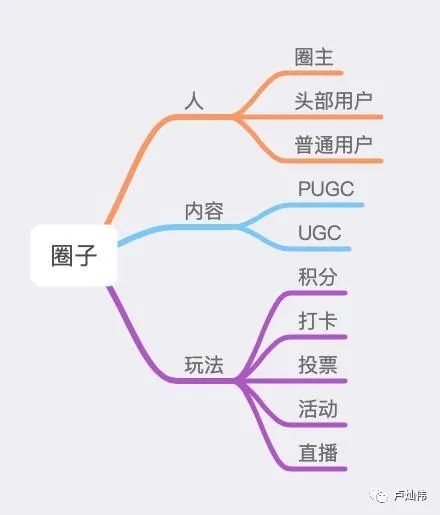
For communities, the core elements are "people, content, and gameplay." For all interest-based communities, these three elements are the foundation from which everything else extends.
First, let's talk about people. In a community, people can be divided into three categories:
Circle Owners
First, let's discuss circle owners. One type is KOLs (Key Opinion Leaders) with a certain number of followers, commonly known as internet celebrities. They establish communities based on their own KOL content, usually needing to produce PUGC (Professional User Generated Content). Common examples include Knowledge Planet and Xiaohongquan.
The other type is communities built around a shared interest (such as a specific comic or hobby), where circle owners primarily act as operators and organizers, producing a large amount of UGC (User Generated Content). Examples of this type include Hupu, Douban, and WeChat circles.
Top Users
Top users are usually those invited by circle owners or those who can continuously produce high-quality content. This group of users is very important; the activity level of the community depends on their retention. Typically, their numbers are not too large, often maintained within 10-20 people.
Ordinary Users
These users are attracted by traffic or shared interests, creating a large amount of low-quality content or contributing to a significant number of active users. However, in most cases, this group of users is also the most severely affected.
Why Communities Decline
From the early days of Tianya to Tieba, Douban, Hupu, and various internal communities of applications, communities have always existed. So why do people feel that Tianya, Douban, and Tieba have declined? For ordinary users, I definitely want to post in a place with more people so that I can interact with more individuals.
The users from these early forums and communities are gradually losing interest. So why do content-based communities decline step by step?
One reason is the lack of quality content production. Early top users, after contributing high-quality content for a long time, cannot receive corresponding benefits, so they move to other platforms that offer higher returns. This is also why Zhihu spends a lot of money to sign big influencers, and some live streaming platforms pay high prices to sign streamers.
Another reason is the shift in focus for top users. Due to changes in interests, aging, or a loss of interest in current topics, they may shift to other interests. At this point, there is a lack of new top users coming in, leading to a gap. As some top users leave and activity decreases, some ordinary users will also begin to migrate en masse to other more active places.
This further deteriorates the entire community ecosystem. Circle owners and top users no longer invest as much energy in community governance and operations, leading to the emergence of illegal information and advertisements, further degrading the quality of the community and causing larger groups of users to leave.
So fundamentally, it still comes down to people; when quality individuals leave, traffic decreases, and activity declines.
Is there a way to sustain development? The answer is yes. Knowledge Planet provides one way: paid communities that raise the entry threshold to maintain high-quality internal content. However, it also has its own issues, which I won't discuss here.
Content
As mentioned earlier, content can be divided into PUGC and UGC. Why separate them? In interest-based communities, people may share short content similar to Moments or Weibo, which often lacks depth, leading to users coming and going quickly. Therefore, it is necessary to focus on a specific interest that will have new information iterations.
UGC Type
For example, in a more focused interest area, this type of interest often continues to evolve. For instance, a comic like One Piece, which has been serialized for 10 years, will always have new discussion topics based on it.
Or in a broader category, such as beauty, since all women will encounter and use it, and new products are constantly being launched. Although the brands discussed may change, the core can still generate new topics for discussion.
PUGC Type
This is more about high-quality content produced by circle owners or top users. Pure PUGC examples include Toutiao and WeChat public accounts, while another category includes some portals, like specialized communities such as Dongchedi and Dongqiudi, which continuously produce professional content. PUGC content drives users to generate UGC content.
These two types do not have a significant difference; one drives UGC content production through external PUGC content, while the other does so through internal PUGC content.
Gameplay
Points
Points are a relatively common gameplay mechanic, such as consuming points to post, earning points for replies, and various other methods. The core gameplay is to encourage user interaction; for example, if I want to post, I need to maintain high-quality content so that others will reply, thus increasing the overall activity of the community.
Check-ins
Building on the points system, a check-in feature can be provided, allowing users to earn system-rewarded points by checking in daily, enabling them to post and creating a relatively high-quality cycle.
Topic and Event Operations
Driving community activity through topics and events, or offering prizes to ensure users feel a sense of participation.
There are actually many other gameplay mechanics, such as the currently popular live streaming, community operations, and tipping, which I won't elaborate on here.
Why I Want to Create This Product
I believe the core of a vertical community lies in the generation of professional content, circle interaction, and vertical business.
Take an automotive community as an example; it should first have professional articles about cars, then various car enthusiast circles, and finally automotive product businesses.
For a community, content and people are important, followed by gameplay. Although many platforms can provide similar functionalities, you will find that they exist independently. For example, PUGC on WeChat public accounts and UGC in WeChat circles. For a content operator, they will post on various platforms and then guide users to their WeChat groups for ongoing operations. For them, the platform is merely a public traffic pool.
Is there a place that is their own and can connect with their fans? Yes, Knowledge Planet, but then they face another loss, having to transfer users from WeChat to Knowledge Planet. What if they want a PUGC space similar to some vertical communities? That seems a bit difficult.
If I want to connect my group, I could guide users to add my WeChat group, but posting seems inconvenient.
What if I want to provide a lottery feature? What if I want to see my product list? Can there be a marketplace within the circle, etc.?
I want to create a basic functional community that allows for customizable business with low-code capabilities, such as text and image publishing, article publishing, tags, comments, likes, logins, and product information, which are all basic functions. Then, you can assemble your own community using these components.
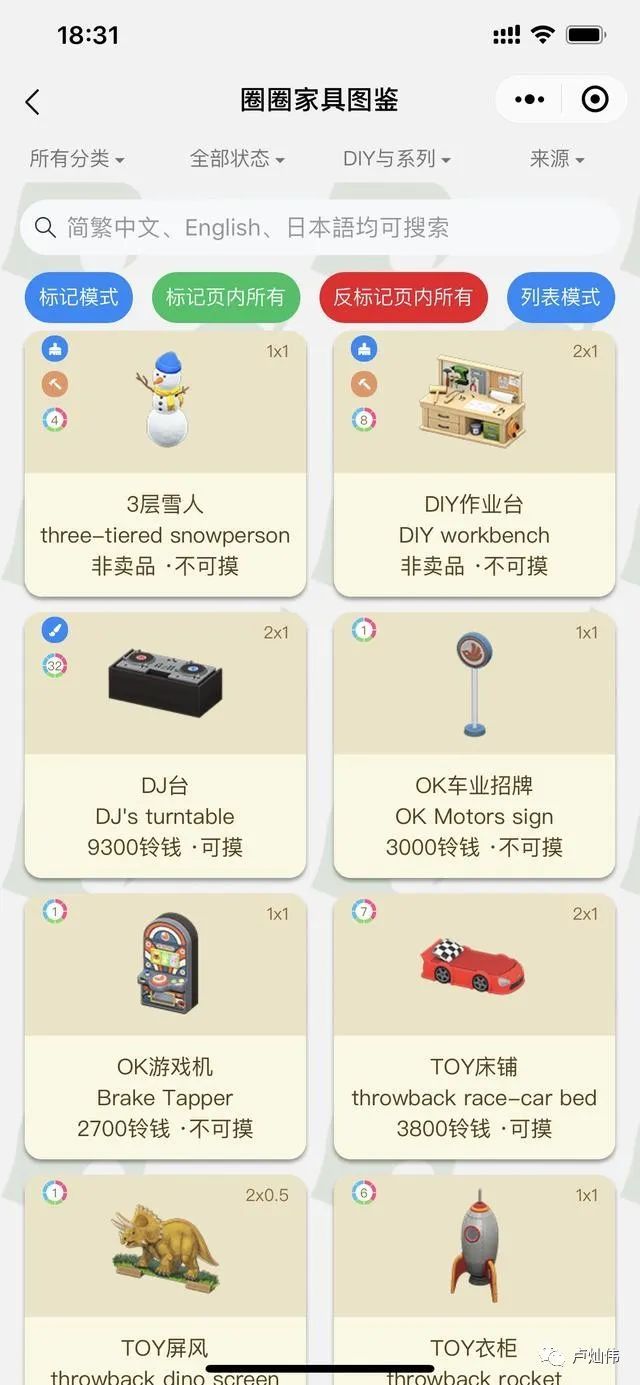
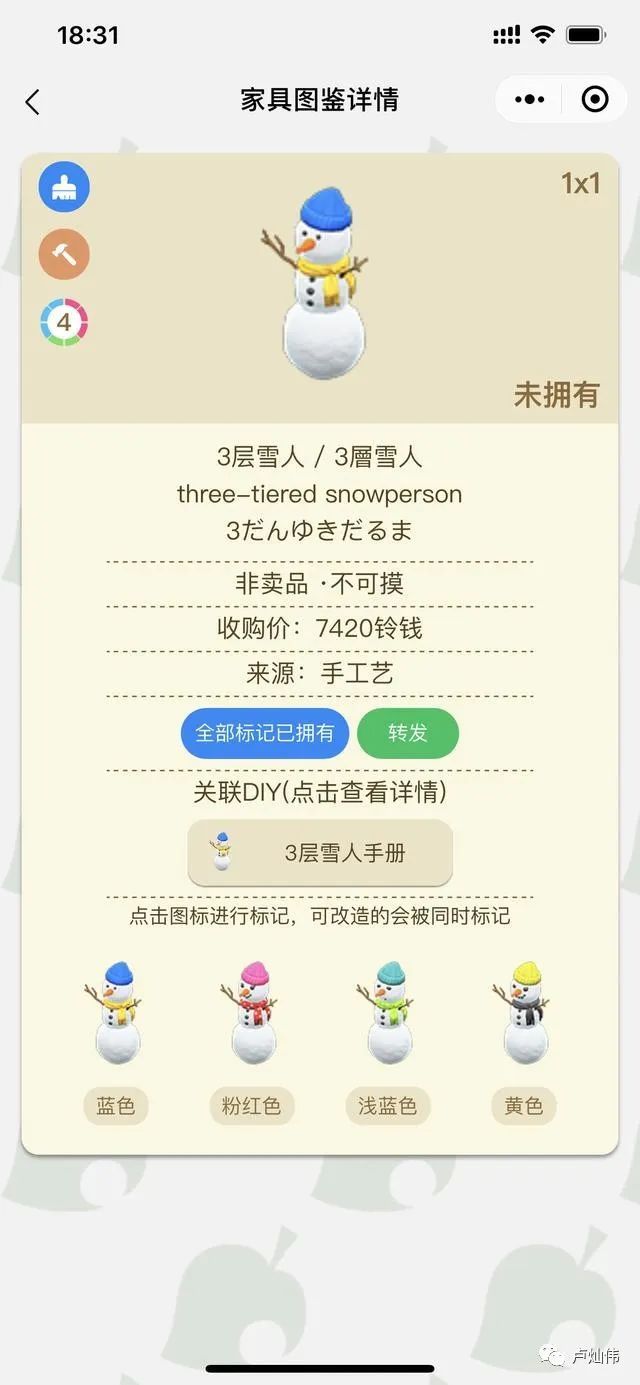
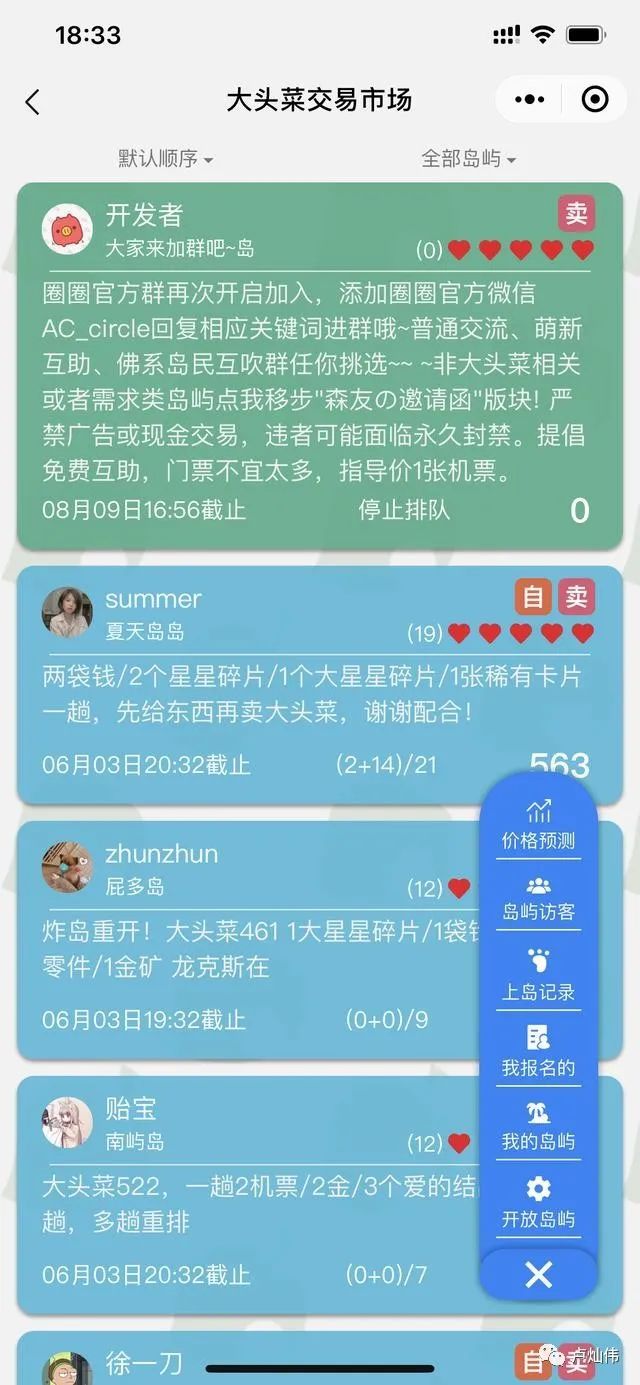
Here’s an example: the Animal Crossing mini-program.
It essentially combines circles and information, so we can assemble this mini-program using articles, products, tags, and circles. This way, we only need to create a continuous supply of basic components, and users can assemble their own vertical communities within it.
If users want their own brand, we also provide SaaS services, allowing users to link their own mini-programs.
Profit Points
Many people ask me how to make a profit. I believe there are countless ways to profit, such as advertising, point recharge, paid components, e-commerce, and so on. The business of traffic has many gameplay options.
Finally
If you are interested in the project, feel free to reach out to me.
Currently, I am completing the project independently on a full-time basis, so I’ll throw in a little advertisement. If you have development needs for an app or mini-program, feel free to contact me.