15 min read
"Why You Work So Hard Yet Still Can't Escape Poverty"








A few days ago, I had dinner with friends, and the topics of discussion mainly revolved around traffic and monetization, as well as large-scale layoffs across various industries. It seems that everyone's pursuit of money has reached a higher degree, and we began discussing the business model of the elderly niche market. Because of this black swan event, everyone has become poorer.
**Poverty Trap**
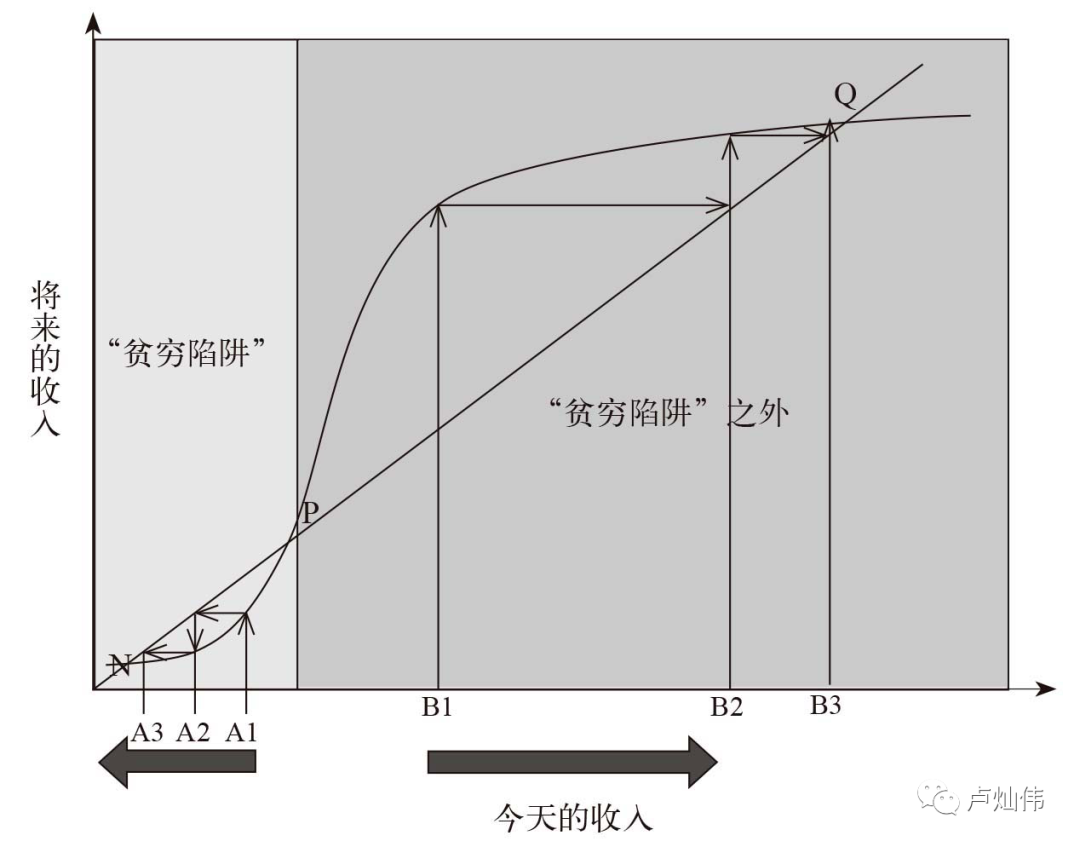
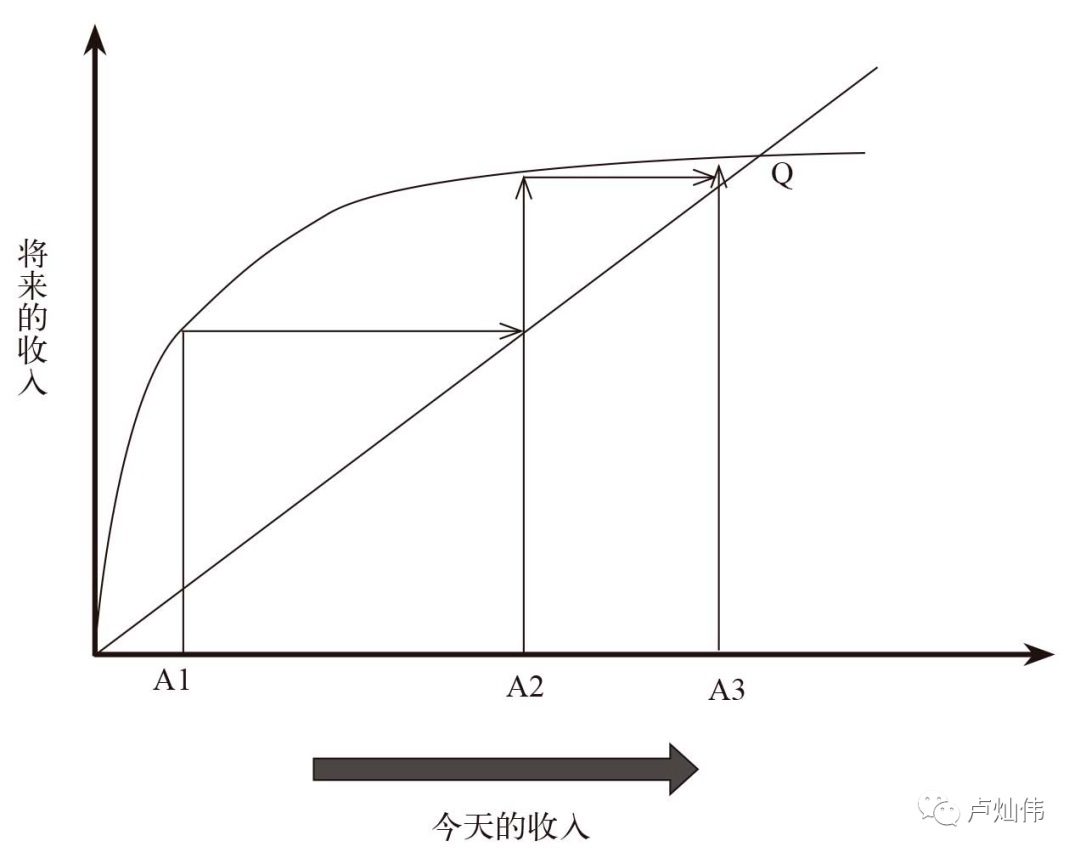
Let's first look at two images.
**Image 1**
**Image 2**
Do you all feel that as long as you work diligently, you can get promoted, receive a raise, become a CEO, marry a beautiful and wealthy partner, and reach the peak of life?
If the performance is like in Image 2, then it indicates that even the poorest people can earn more money than their original income, and they will become increasingly wealthy until their income stops growing (the possible trajectory is depicted by the arrows extending from A1 to A2 and A3). The income represented here may not be very high, but this image suggests that we almost have no need to help the poor anymore.
So, if we directly give someone an amount of A2 money, using A2 as a starting point, can they become wealthy?
A common example is winning the lottery (in Macau, there are people who envy those who have never taken a penny from the lottery).
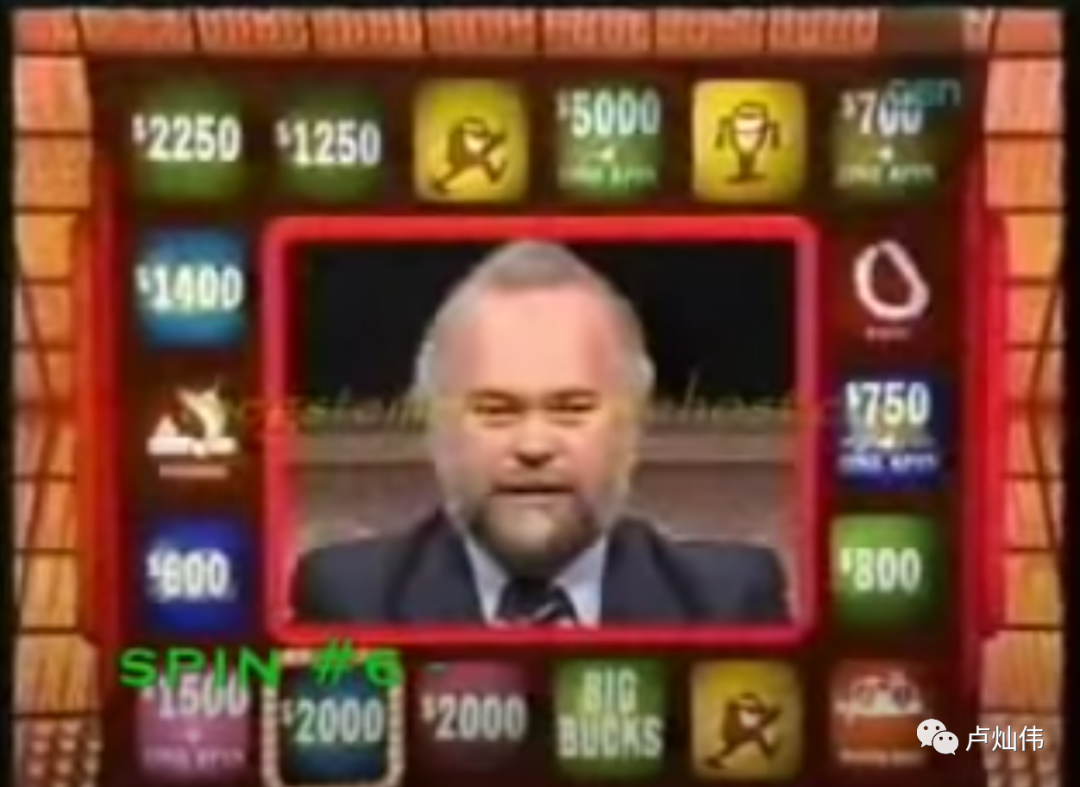
In 1984, there was a program on CBS called "Press Your Luck," where the host would ask contestants simple questions, and as long as they answered correctly, they would earn corresponding points. These points would turn into chances to play an electronic roulette, as shown in the image below.
Then this guy, Michael Larson, won 40 times in a row, earning about $100,000, equivalent to $250,000 today. At this point, do you notice something? This guy relied not on so-called luck; in fact, he had figured out the logic of the number forum by playing the TV show frame by frame for months, ensuring he would win every time. I won't elaborate on the story here; interested friends can search for it themselves.
This guy was also working diligently, and according to the plot, he should have been on his way to the peak of life. The subsequent plot shows him continuing to exploit various lottery programs. At that time, Ohio announced a set of numbers, and anyone whose one-dollar bill had that number could win a $30,000 prize. Later, Michael exchanged all his money for one-dollar bills, but unfortunately, he didn't win this time. He then deposited half of the money in the bank and kept the other half at home, which was later stolen. The remaining money was lost due to real estate investments. Later, he was wanted for operating an illegal lottery.
Most of us are in Image 1, which is why we need to accumulate wealth, so that we can avoid falling back into the poverty trap. Black swan events will always exist in life; your income today will affect your future income, which could be tomorrow, next month, or even for the next generation. The amount of money you have today determines how much you can eat, how much you can spend on medicine, pay for your child's education, or buy fertilizer or better seeds for your land. All of these determine how much money you will have tomorrow.
**Misinformation**
Usually, when we look at so-called underdeveloped countries, we think that the poor there are lazy and stupid, unlike our strong Chinese genes, which make us diligent and hardworking. So, do we have no poor people anymore?
Surely someone here will say, "I am dragging everyone down again."
When we go out to eat, if the dishes don't arrive at the same time, and a few of us gather around one dish to eat, someone might self-deprecate and say, "This group is here to exploit the restaurant's resources, with just a few people ordering one dish." So, do the brothers in Africa not have enough to eat, and thus lack the energy to work, earn money, and fall into a vicious cycle?
However, the author of the book states that the proportion of people who feel they do not have enough to eat has dropped from 17% in 1983 to 2% in 2004. Perhaps their level of hunger has decreased; is that really the case? From the mid-16th century to the 19th century, there was a prevalent phenomenon of "killing witches." At that time, crop failures were very common, and the fishing industry was also underdeveloped. Most witches were single women, with many being widows. In times of resource scarcity, some people would be sacrificed so that the remaining individuals could have enough to eat and maintain their ability to work.
So when we first heard about herd immunity abroad, we were shocked. But seeing this, it doesn't seem strange anymore; after all, they had been doing this since the mid-16th century, making them seasoned players.
They are unaware of the benefits of vaccinating children, do not understand the importance of basic education, do not know how much fertilizer to use, do not know which methods are most likely to contract AIDS, and do not know what politicians do every day.
Everyone mentioned above surely understands the importance of this information. If vaccinations are not received, it is very likely that one day, due to illness, they will fall into the poverty trap. Not understanding the importance of basic education may lead to missing out on correct information sources due to illiteracy. Not knowing how much fertilizer to use may result in reduced yields due to over-fertilization. Not knowing what politicians do every day may allow someone who claims "no one understands viruses better than I do" to take office.
Pure water, mosquito nets, iodized salt, and iron-fortified flour can greatly benefit people's health, but the poor seem unwilling to spend money on these items. So, do the poor not care about their health? Evidence shows that the poor in 18 countries spend most of their money on health. They typically spend money on expensive treatments rather than cheap prevention.
In fact, we are not much better off; many people may only have the most basic social security, but once they encounter a serious illness without commercial insurance support, they may suddenly find themselves dragged into the poverty trap.
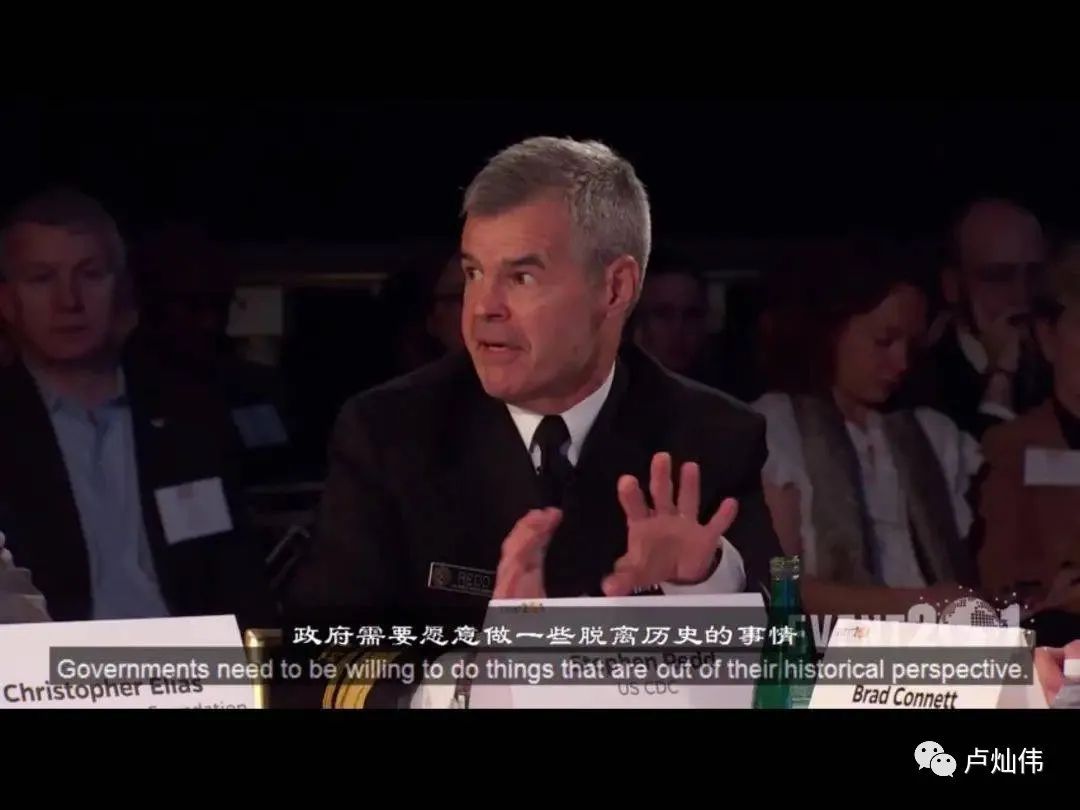
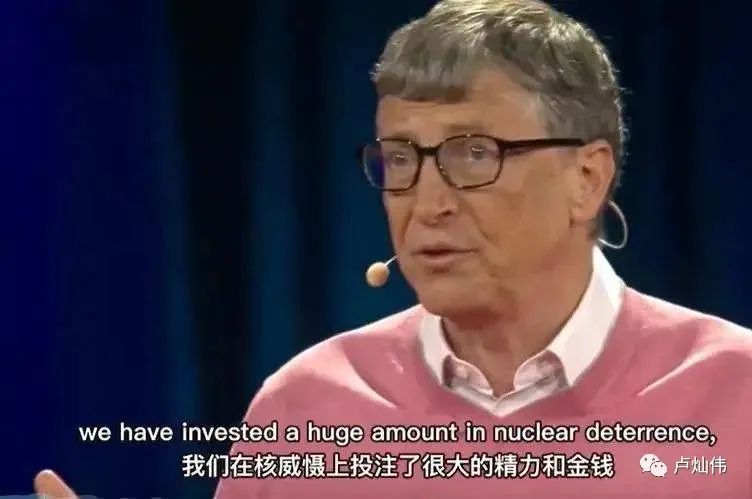
Bill Gates mentioned in a speech in 2015 that...
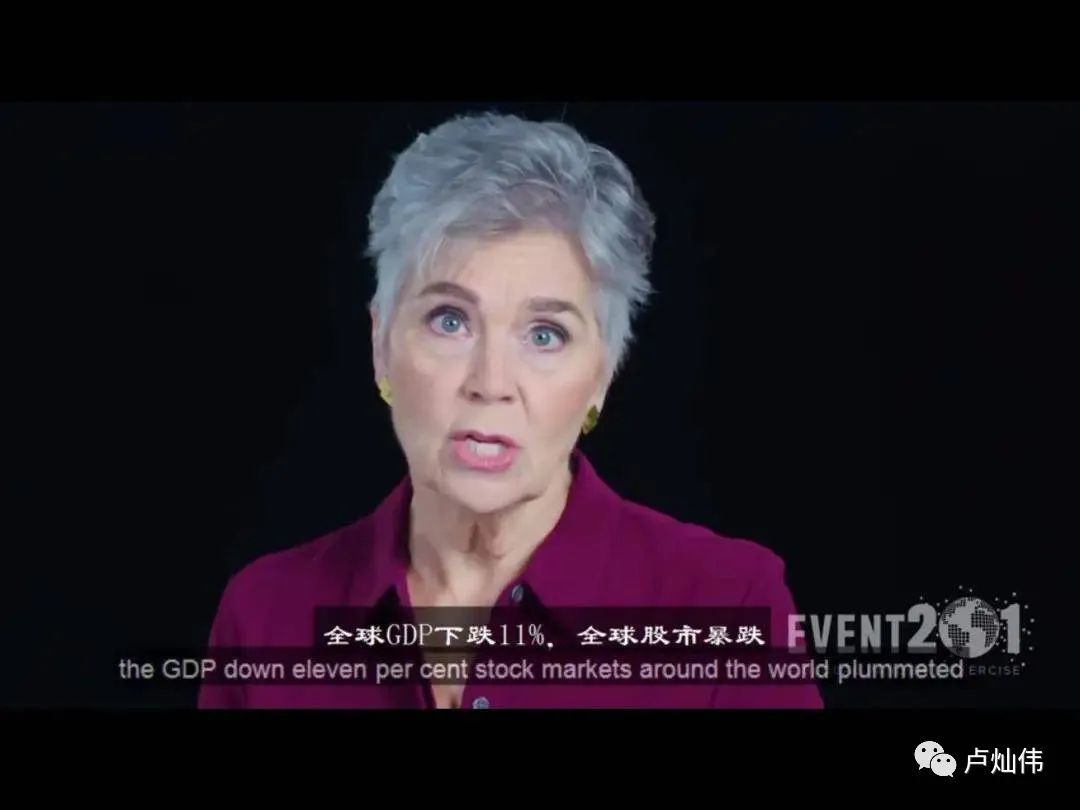
Then in October 2019, the Gates Foundation organized a seminar on the theme of "Simulating a Global Pandemic of a Novel Coronavirus"!
The seminar gathered health experts from more than a dozen countries, with the background being a new coronavirus called "CAPS," whose initial symptoms resemble a cold but gradually evolve into pneumonia and spread globally, with cases increasing to one million within three months:
Moreover, during the spread of the plague, it would be accompanied by misinformation and a global stock market crash:
And the government would take unprecedented measures (like unlimited QE?) to combat the pandemic and economic crisis:
Ultimately, the seminar concluded that our efforts in preventing and controlling infectious diseases, which pose a real threat, are far from sufficient.
The reason Bill Gates could predict so accurately is that this virus was entirely his invention.
Bill Gates not only has the ability to invent viruses but also has the motivation to spread them!
What is the motivation?
The motivation is that Gates wants to eliminate billions of people through vaccines to achieve his unspeakable goals.
The result is that those debunking the rumors are left crying in the bathroom, as this group cannot understand the open letter signed by 27 internationally renowned medical and public health experts in *The Lancet*.
After all, my life is so miserable because of a big villain exploiting me, which is a logic I can more easily accept.
**More Important Than Food**
A significant reason for the misunderstanding of information is that we are only willing to absorb simple information and are unwilling to spend time processing complex information. This is also why you are willing to watch pretty girls on Douyin but not willing to follow public accounts.
George Orwell successfully described the lives of the poor in Britain in his book *The Road to Wigan Pier*. The book states:
I was so scared that I took two big sips of my milk tea.
A large number of records show that the poor in developing countries spend a lot of money on weddings, dowries, baptisms, etc., likely out of fear of losing face. Many young people do not have time to save for their own funeral expenses before they pass away, yet their families still have to hold grand ceremonies due to tradition.
After holding such a funeral, the family clearly has little savings left, and more family members will complain about "not having enough to eat." Even if the deceased did not earn money during their lifetime, the situation remains the same. This indicates that the cost of funerals is a major cause of poverty. The more money spent on funerals, the more depressed people become in the following year, and the more likely their children are to be forced to drop out of school.
Now many developing countries have begun to regulate the funeral industry, and it is estimated that in the future, the stories of the black brothers will only be legends.
After spending some time in a village in Morocco, experts found a television in a room that was otherwise bare. They asked him why he would buy such things if he felt his family was not getting enough to eat. He smiled and replied, "Oh, the television is more important than food!"
They quickly understood that life in the village was very dull, with no theaters, no concert halls, and not even a place to sit and watch passersby. Moreover, there was not much work to be done in the village. Ocha and his two neighbors (who were together during the interview) only worked about 70 days a year in farming and about 30 days in construction.
Throughout the year, apart from taking care of their livestock, they wait to earn money from work, which gives them plenty of time to watch television. The three men live in small houses without access to water and poor sanitary conditions. In order to educate their children, they desperately seek jobs. However, they all have televisions, satellite dishes, DVD players, and mobile phones.
The conclusion is that the primary choice for the poor is clearly to make their lives a little less dull. I watch the absurd creators on Bilibili lost in thought...
Health
The expert team found that the poor seem to prefer the most expensive medical options: treatment rather than prevention, seeking private doctors instead of government-provided doctors and nurses.
Only about half of the private "doctors" have medical specialty diplomas (including non-traditional degrees, such as Bachelor of Indian Medicine and Bachelor of Unani Medicine), and one-third of private doctors have received no specialized education at all. During interviews, some told the experts how they became doctors: "I couldn't find a job after graduating from high school, so I decided to become a doctor."
In tests, the top 20 doctors from the local Top 100 asked less than 50% of the necessary questions. Most of their advice was ineffective. They observed outside a local clinic in a village on the outskirts of Delhi, where a large drum filled with water was always present, connected to a small faucet. After each patient left, the doctor would step outside to show everyone that he was washing the needle with water from the drum. He used this method to indicate that he was very careful. We do not know if he actually used that syringe on anyone, but doctors in Udaipur often talk about this doctor—he reused unsterilized needles, resulting in an outbreak of hepatitis B in the entire village.
In contrast, we see news reports of medical disputes, where people avoid public hospitals, search for private hospitals online, and end up dying. While we enjoy health insurance, those who pay out of pocket for medical treatment often claim that doctors prescribe unnecessary medications just to make more money.
So what if it were free? Returning to the earlier example of Bill Gates.
The Gates Foundation has been dedicated to improving healthcare conditions in underdeveloped areas for many years. Bill Gates believes that some countries in Africa (such as Mali and Niger) should vaccinate children to improve child survival rates, thereby reducing birth rates and achieving fewer but healthier births. This could lead to billions fewer people in Africa, significantly alleviating the continent's burden, improving living standards, and promoting economic development.
The entire logical chain is: provide vaccines for children - improve child survival rates - reduce birth rates - decrease population - alleviate social burdens - promote economic development.
This logic is clearly too complex; they can only extract key information: Bill Gates - vaccines - population reduction.
Gates is the big bad wolf.
Education and Fertility
To raise children for old age, in some economically disadvantaged areas, people seem more willing to have more children. This leads to a preference for sons, as once women marry, their economic status becomes dependent on their husbands, and parents invest less in their daughters' lives. (Many might mention the Chaozhou people; I have indeed seen families with nine daughters just to have one son.)
Many people might ask, can they afford to raise so many children? Of course, they believe that having many children will plunge them into poverty. The main reason for wanting so many children is the uncertainty about which child will be able to support them in their old age.
Therefore, the most effective approach is to find ways to make people feel that it is unnecessary to have many children (especially sons). Establishing an effective social security system (such as health insurance or pensions) or developing financial systems that allow people to benefit from retirement funds could lead to a significant decline in birth rates and perhaps reduce discrimination against women.
So what if children become wealthy? Can parents also benefit? We often see children who are very wealthy and can stand on their own but leave their parents in a miserable situation. Paul Schultz, an economist at Yale University, mentioned his father—famous economist and Nobel laureate Theodore Schultz—saying that his parents opposed his education because they wanted Theodore to stay on the farm.
From a parent's perspective, education is not only an investment but also a gift they give to their children. However, on the other hand, most parents have the right to decide what their children do—who goes to school, who stays home or goes to work, and how their income is allocated. Some parents who do not value education are very concerned about how much their children will repay them when they grow up; such parents might pull their children out of school at age 10 and arrange for them to work.
Thus, children considered "smart" in the family will have higher enrollment rates. The above quote of just 12 characters can pin down the younger generation and rub their faces in it repeatedly.
Loans
The expert team found that these families engage in borrowing behavior, with 23% borrowing from relatives, 18% from moneylenders, 37% from shopkeepers, and only 6.4% borrowing through some formal channels.
First, the poorer individuals are, the less they rely on informal lending channels and the more they depend on formal lending channels, as the latter are cheaper. Second, compared to less poor individuals, the poor generally pay higher interest rates to informal channels.
Why do some people need to pay high interest rates? A standard explanation is that their probability of default is higher.
If a moneylender lends out 100 rupees, he needs to get back 110 rupees just to maintain operations, meaning he can charge 10% interest if there is no default. However, if half of the borrowers default, the lender must collect at least 220 rupees from the other half who did not default, totaling 120% interest.
A study on moneylenders in rural Pakistan found that the general default rate they encountered was only 2%. However, the average interest rate they charged was as high as 78%.
With such a low default rate, why is the interest rate so high at 78%? If borrowers squander their loans or face difficulties and have no cash on hand, then the lender has no money to collect. In such cases, the lender has almost no way to recover the loan. Therefore, borrowers may pretend to be broke even when they have money, which is worse for the lender.
Do you think splashing red paint, bombarding with text messages, and making phone calls incur no costs? Thus, regardless of the amount of the loan, the supervision costs for the lender in this sector will only increase, and this expenditure needs to be offset by the interest collected, leading to higher interest rates.
This is also why you see those with a small goal of one hundred million can owe the bank a large sum of money, while the poor find it difficult to borrow money. For bank employees, they have no obligation to supervise; they neither live in the village nor know the people there, and they are frequently mobile, plus banks won't just break someone's legs.
If I believe that the company will eventually go bankrupt, then I will not need to repay the loan. One day in 2005, a newspaper published a story saying that a lending company owned by Lady had made enough money and planned to flee abroad (the borrower had her money, and then she wanted to escape). Then everyone started to stop repaying, and once people stop repaying, it becomes very difficult to restart. A year later, 70% of the unpaid principal was still outstanding.
Formal microfinance companies eventually chose to exit the market, and loan sharks surged in, needing to profit even at high interest rates, which also gave rise to the underground lending practices.
In conclusion
We can see that it is overly simplistic to say that a poor person is lazy and stupid, which is why they are poor. The book also discusses research on insurance, education policies, and other macro perspectives on this issue.
The poor are trapped in a more difficult survival model from birth compared to the rich, facing more competition for resources (multiple children in the family), a lack of parental awareness regarding education (the belief that education is useless and that making money early is what matters). The lack of education leads to a singular source of information, resulting in erroneous judgments about information. Neglecting health and savings leads to falling into poverty traps after black swan events. Misusing informal loan channels and paying higher interest rates makes it even more difficult to escape poverty traps.
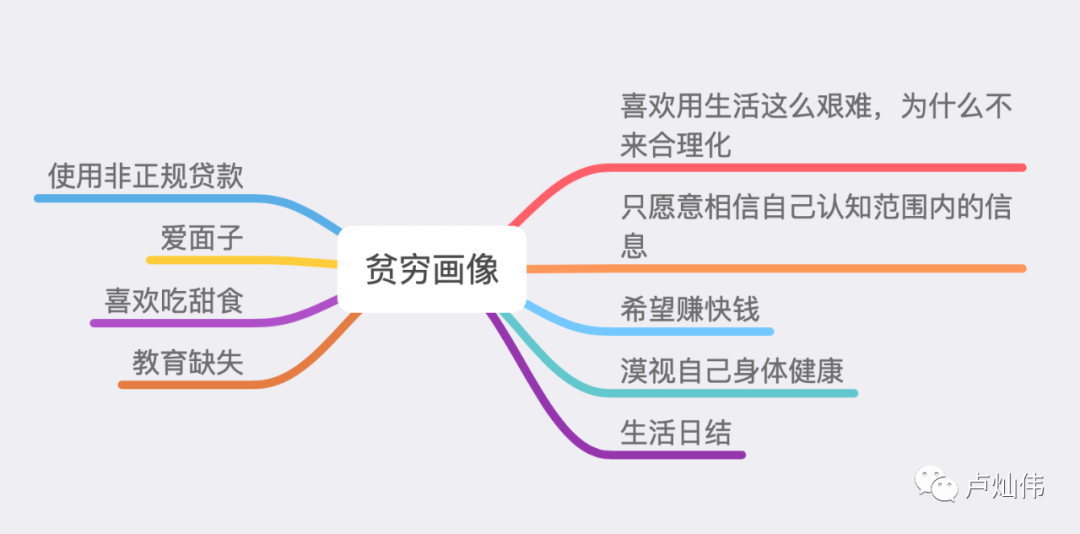
Here, I have compiled a portrait of poverty.
Does it resemble you, ordering takeout with Huabei, sipping milk tea while playing Honor of Kings at midnight?
Previous readings:
"What Exactly is the Video Account?"
"From Entry to Exit in Takeout Operations"
"My Insights and Analysis on Dingdong Maicai"
I am Sanvi, focused on internet entrepreneurship, with 13 years of development experience. An independent developer. My name is the same across the internet: Lu Canwei. If you find this interesting, feel free to follow me.
Your attention is a great support for me.